Different Shapes of Sputtering Targets
(주)연진에스텍은 Planar (flat) Target과 Rotary (cylindrical) Target, Circular Target 및 Ring Target 등 대부분의 증착 공정에 부합하는 다양한 형태의 스퍼터링 타겟을 제공하며, 타겟 크기의 커스터마이즈가 가능합니다.
Molybdenum Sodium Target (MoNa Target)
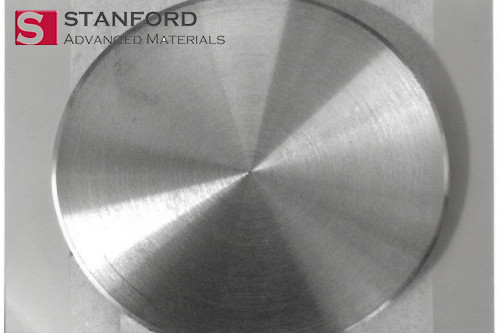
Overview of Molybdenum Sodium Target (MoNa Target)
The MoNa Target is a dual-element sputtering material that combines molybdenum’s high melting point, mechanical strength, and chemical stability with sodium’s lightweight and high ionic mobility. This target features a fine, uniform microstructure achieved through advanced alloying and sintering processes, ensuring consistent sputtering behavior and even film deposition. Molybdenum provides structural integrity and oxidation resistance at elevated temperatures, while sodium enhances reactivity and aids in incorporating alkali elements into deposited films. This synergy results in a material with customized electrical and thermal properties, moderate density, and reliable performance in vacuum environments. Additionally, the MoNa Target is compatible with both DC and RF sputtering systems and exhibits good thermal expansion compatibility with various substrate materials, making it versatile for complex material systems.
Specifications of Molybdenum Sodium Target (MoNa Target)
Chemical Composition: Mo, Na
Purity: 99.95%
Shape: Planar Disc
Please note that the specifications above are based on theoretical data. For customized requirements and detailed inquiries, contact us directly.
Custom Dimensions
- Diameter: Customizable to specific requirements
- Thickness: Adjustable based on application needs
Applications of Molybdenum Sodium Target (MoNa Target)
-
Solid-State Batteries: Utilized in the thin film deposition of solid electrolytes or sodium-based battery components, leveraging sodium’s ionic conductivity and molybdenum’s stability.
-
Sodium-Ion Energy Storage: Ideal for developing electrodes or interlayers in sodium-ion batteries, supporting research into alternatives to lithium-ion technologies.
-
Functional Thin Films: Employed in fabricating alkali-metal-doped films with tailored electrical and chemical properties for use in electronics or sensors.
-
Photovoltaics & Optoelectronics: Facilitates the creation of advanced coatings in solar cell research and development, particularly where alkali elements modify grain boundaries or electrical characteristics.
-
Advanced Coating Technologies: Used in surface engineering applications where the combined properties of oxidation resistance and ionic modification are advantageous.
Packaging Options for Molybdenum Sodium Target (MoNa Target)
Our MoNa Targets are packaged to ensure their integrity during transit. Depending on the size and dimensions, smaller targets are securely placed in polypropylene (PP) boxes, while larger ones are shipped in custom-built wooden crates. We prioritize tailored packaging solutions and utilize appropriate cushioning materials to provide maximum protection during transportation.
Packaging Choices:
- Carton
- Wooden Box
- Custom Packaging
Manufacturing Process

Testing Methods
- Chemical Composition Analysis: Utilizes techniques such as Glow Discharge Mass Spectrometry (GDMS) or X-Ray Fluorescence (XRF) to verify purity and composition.
- Mechanical Properties Testing: Evaluates tensile strength, yield strength, and elongation to assess material performance.
- Dimensional Inspection: Measures thickness, width, and length to ensure compliance with specified tolerances.
- Surface Quality Inspection: Identifies defects like scratches, cracks, or inclusions through visual and ultrasonic examinations.
- Hardness Testing: Determines material hardness to confirm uniformity and mechanical reliability.
Frequently Asked Questions about Molybdenum Sodium Target (MoNa Target)
Q1: Is the target reactive due to the presence of sodium?
A1: Yes, sodium is highly reactive. Therefore, the target should be handled and stored in a dry, inert environment. The sodium is uniformly distributed and stabilized within the molybdenum matrix to ensure sputtering consistency.
Q2: What is the purity of the MoNa Target?
A2: Standard MoNa targets are manufactured using high-purity raw materials, typically achieving an overall target purity of ≥99.95%.
Q3: What sputtering systems are compatible with MoNa Targets?
A3: MoNa Targets are compatible with most magnetron sputtering systems and can be used in both DC and RF configurations, depending on your specific deposition requirements.
Performance Comparison: MoNa Target vs. Mo Target vs. Ta Target
|
Property |
MoNa Target |
Molybdenum (Mo) Target |
Tantalum (Ta) Target |
|---|---|---|---|
|
Composition |
Mo + Na |
Pure Mo |
Pure Ta |
|
Magnetic Properties |
Non-magnetic |
Non-magnetic |
Non-magnetic |
|
Corrosion Resistance |
Good |
Excellent |
Excellent |
|
Thermal Stability |
High |
High |
High |
|
Wear Resistance |
Good |
High |
Excellent |
|
Electrical Conductivity |
Moderate |
Moderate |
Low |
|
Density |
~10.2 g/cm³ |
~10.22 g/cm³ |
~16.6 g/cm³ |
|
Melting Point |
~2,623°C |
~2,623°C |
~3,020°C |
|
Applications |
Electronics, Coatings |
Electronics, Thin Films |
Electronics, Medical Implants |
Additional Information
Raw Materials – Molybdenum (Mo)
Physical Properties:
- Density: 10.22 g/cm³
- Melting Point: 2,623°C
- Structure: Body-Centered Cubic (BCC)
- Magnetic: Non-magnetic
Chemical Properties:
- Possesses an exceptionally high melting point, excellent thermal and electrical conductivity, and outstanding resistance to corrosion and wear.
- Commonly used to strengthen steel alloys, endure high-temperature environments, and serve as a base material for various sputtering targets.
- Forms stable oxides and offers chemical durability even under aggressive conditions, making it ideal for applications in electronics, aerospace, energy, and thin film technologies.
Industrial Applications:
- Alloying Agent: Enhances toughness and fatigue resistance in steel and other alloys.
- Catalysts: Used in certain chemical reactions and processes.
- High-Performance Alloys: Integral in aerospace and automotive components requiring high strength and durability.
Raw Materials – Sodium (Na)
Physical Properties:
- Density: 0.968 g/cm³
- Melting Point: 97.72°C
- Structure: Body-Centered Cubic (BCC) at room temperature
- Magnetic: Non-magnetic
Chemical Properties:
- An alkali metal known for its low atomic mass, high chemical reactivity, and excellent ionic conductivity.
- Soft, silvery-white, and highly reactive, especially in the presence of moisture or oxygen.
- Plays a critical role in energy storage technologies, such as sodium-ion batteries and solid-state electrolytes, due to its ability to move easily through solid materials as an ion.
- Its unique chemical behavior makes it valuable for modifying the electronic properties of thin films and facilitating advanced research in electrochemistry and materials science.
Industrial Applications:
- Energy Storage: Essential for sodium-ion batteries and solid-state electrolytes.
- Chemical Synthesis: Utilized in various chemical reactions and processes.
- Electronics: Employed in the modification of electronic properties in thin films and advanced materials research.

- High Purity & Performance 일관된 증착 품질과 오염을 줄이도록 가공합니다.
- Material Variety 다양한 응용 분야의 요구 사항에 맞게 순수 금속, 합금, 세라믹 및 화합물로 제공됩니다.
- Custom Manufacturing 특정 시스템의 필요요구 사항에 맞게 크기와 형태, 조성을 맞춤화했습니다.
- Precision Design 반복 가능하고 균일한 박막 결과를 위해 엄격한 공차로 제조되었습니다.
- Flexible Supply Chain 최고의 제조업체와 강력한 파트너십을 통해 일관된 품질과 on-time 납품을 보장합니다.